 Enquire
His first exhibition at the Dudley Gallery was in 1881, when Thomas was 28 years old. He apparently gained his insight to draw hunting scenes so well through time spent at Tattersall’s horse market, where horses were auctioned and Thomas studied their physiques, anatomy and character.
As well as drawing and painting horses beautifully, he excelled at portraying working dogs in action and at rest and had a style that was commercially popular. He exhibited at the Royal Academy every year until his death in 1912.
His life, therefore, coincided with the heyday of genteel country sports in Britain and the progression from percussion muzzle-loader to single-trigger, sidelock ejector in the shooting field.
Among his admirers and patrons was King George V, who commissioned him to paint royal hunting scenes. Several examples of his work still reside in the Royal Collection.
Blinks eventually married and moved to London, where he lived in Kentish Town with his wife Anne and their three children. By 1886 he owned properties in both St. John’s Wood and Ware in Hertfordshire. So, was clearly prospering from his art by his mid thirties.
He died in December 1912 and is buried in Hendon Park Cemetary. There is a pencil sketch of him by Fred Roe in the National Portrait Gallery and today his oil on canvas paintings sell for up to #50,000. Another image of Blinks, a self-portrait of him in riding gear, sold in 2019 at auction in the UK.
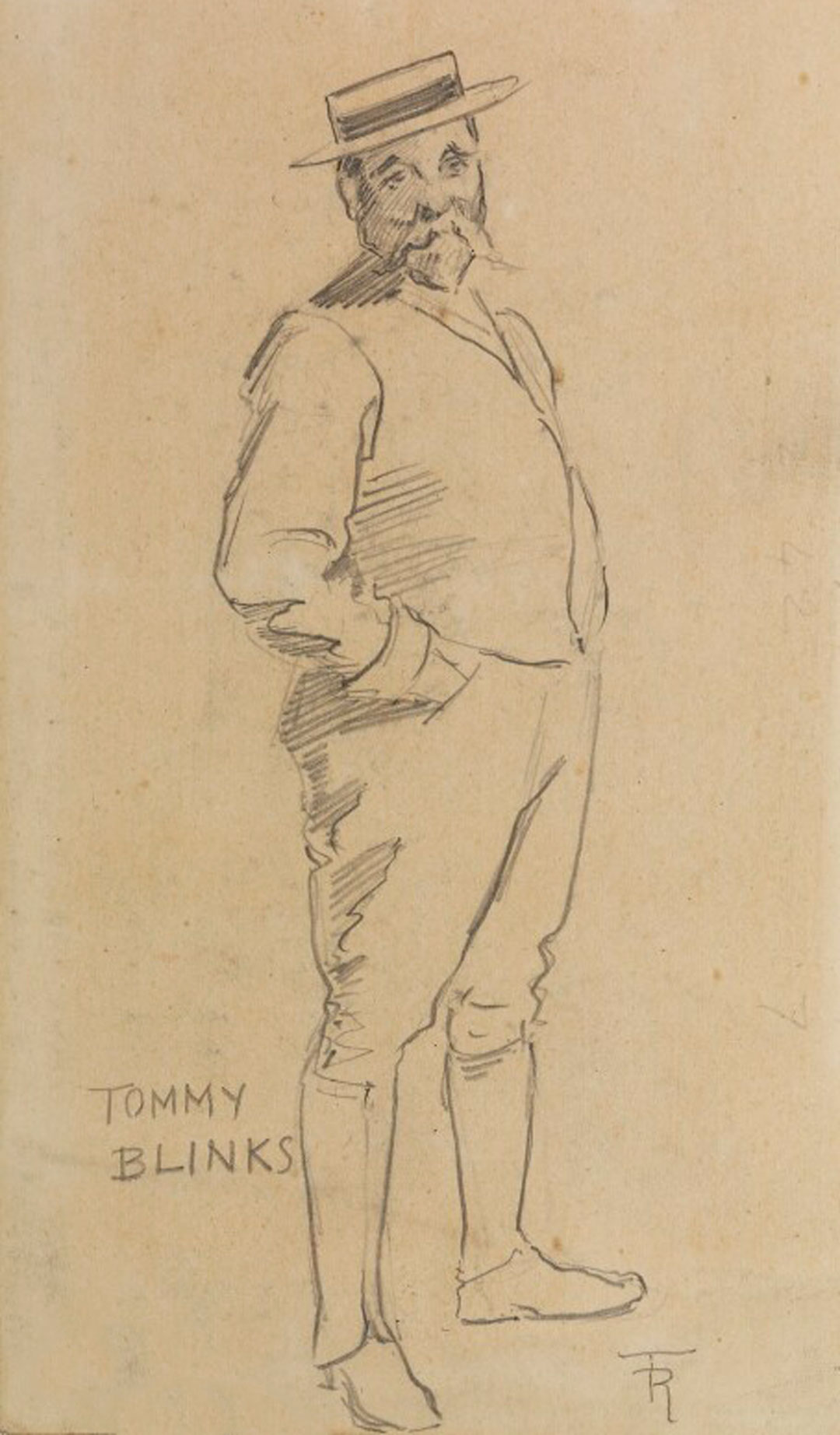
In both portraits, Blinks sports an impressive Victorian beard, with waxed moustache, and a confident, open manner.
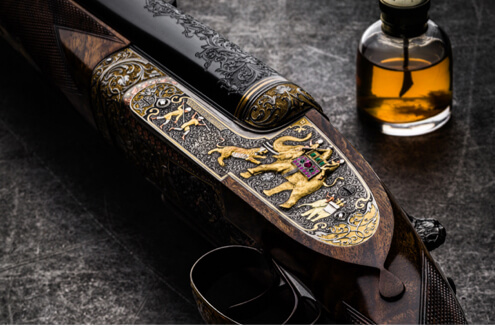
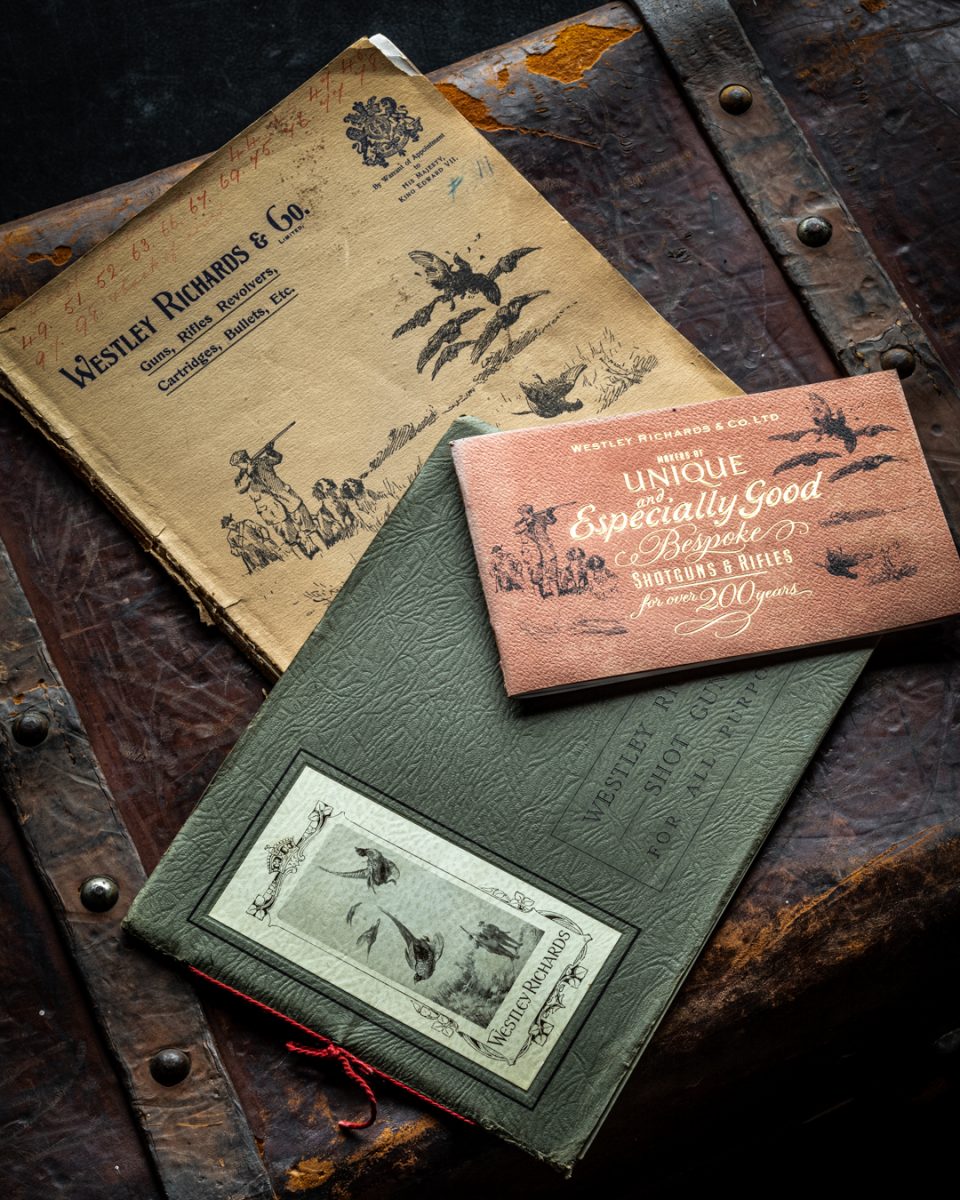
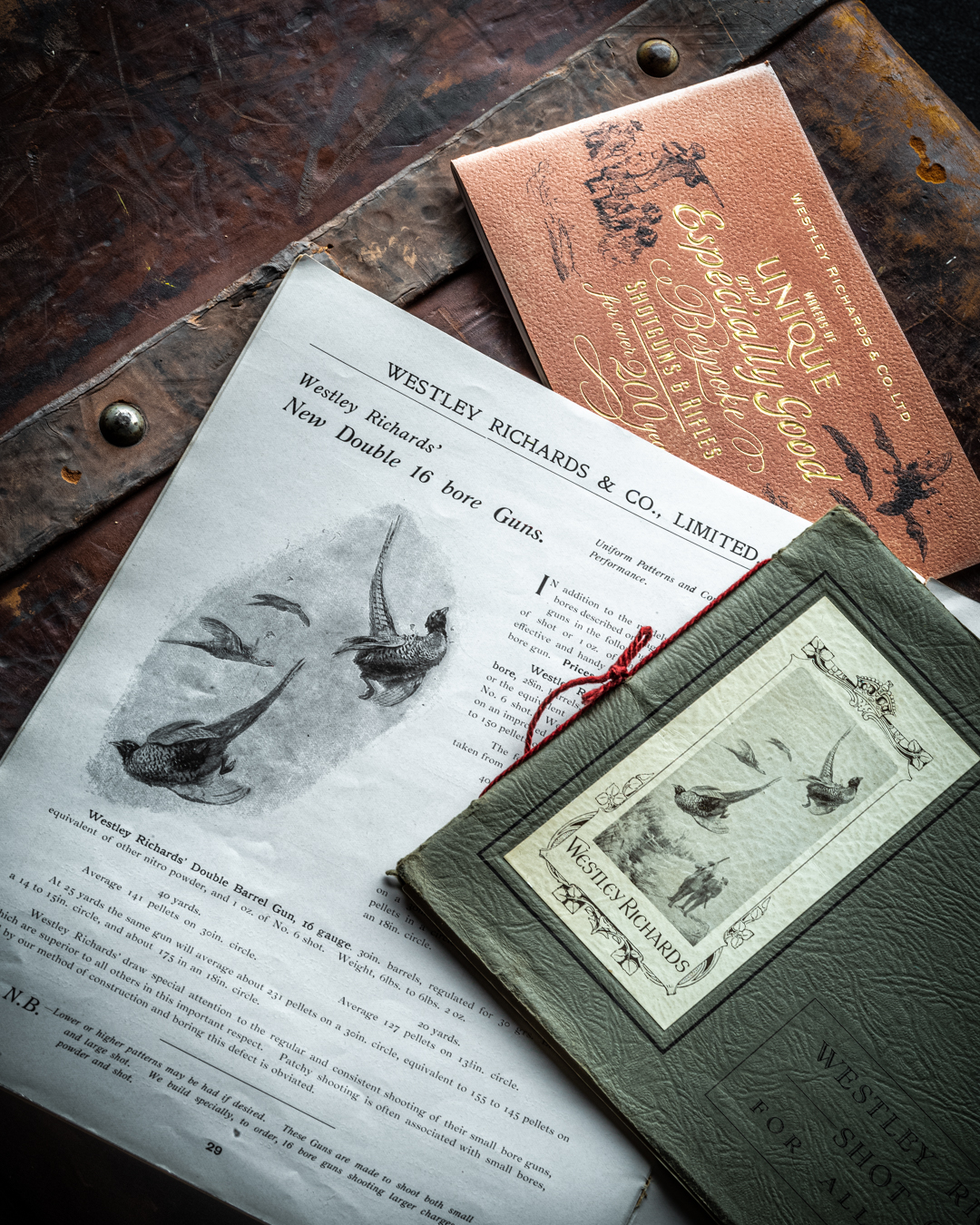
Gunmakers during Blinks’ lifetime were in need of sporting images for their literature, case labels and even for engraving on guns and Blinks seems to have had a style that appealed.
In addition to his horse and dog paintings, he also painted action scenes of game birds, in flight, sportsmen shooting, and still life portraits of dead game.
Among these is a group scene including famed Shot Walter Winans in action on the running deer range on Wimbeldon Common. Winans called Blinks ‘the best painter of a hound and one of the best painters of a horse in action that have ever existed’. The painting of Winans, which hung at Bisley Camp for years, sold in 1997 for seventy four thousand pounds.
Amongst his game bird portraits, ‘Pheasant Shooting’ sold in 2016 for #2,500. This shows gliding pheasants in the foregrounds and a distant line of guns in the lower background. This painting originally sold after Blinks’ death, in 1911 for 4 ½ guineas.
Another, ‘In the Field’ shows setters with Guns walking up in a field of brassicas. A pair of his driven shooting paintings ‘Pheasant Shooting’ and ‘Partridge Shooting’ sold at Sworders in 2015 for #13,000. ‘A Successful Catch’ shows a tweed clad sportsman waiting for his flat coat retriever to bring him a partridge. That sold in a 2014 auction for #3,000.
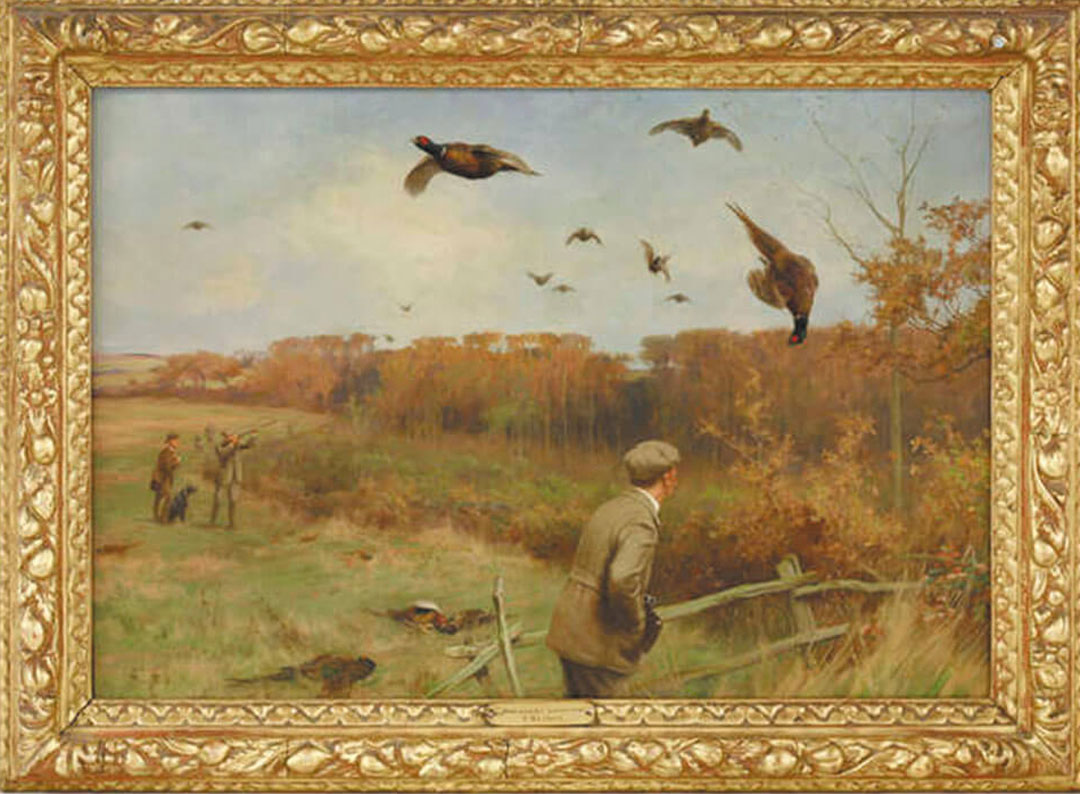
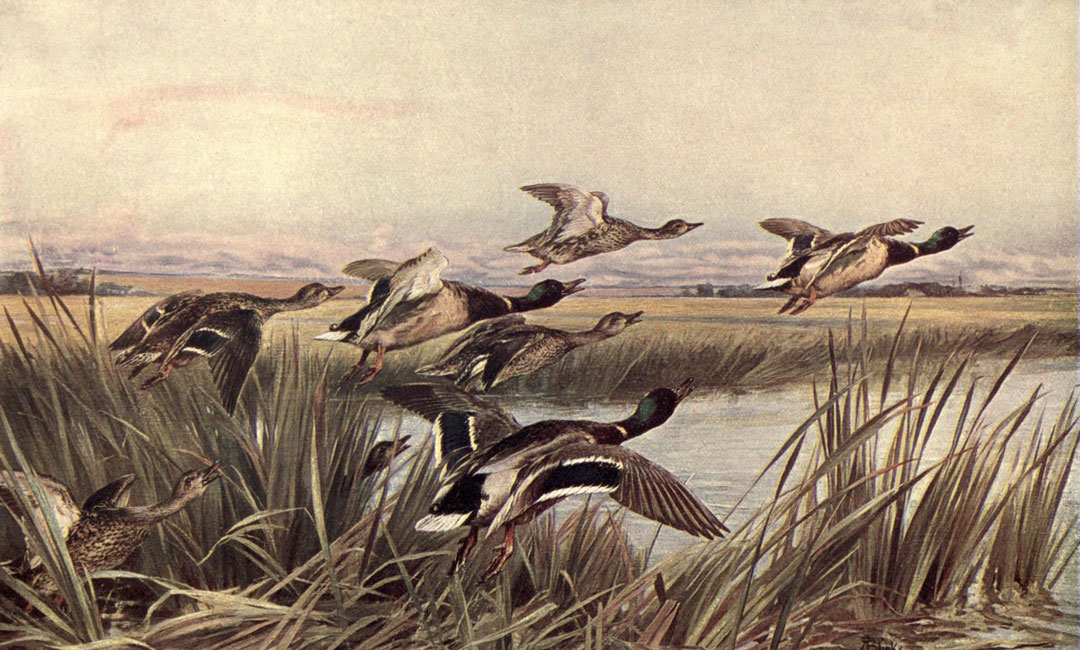
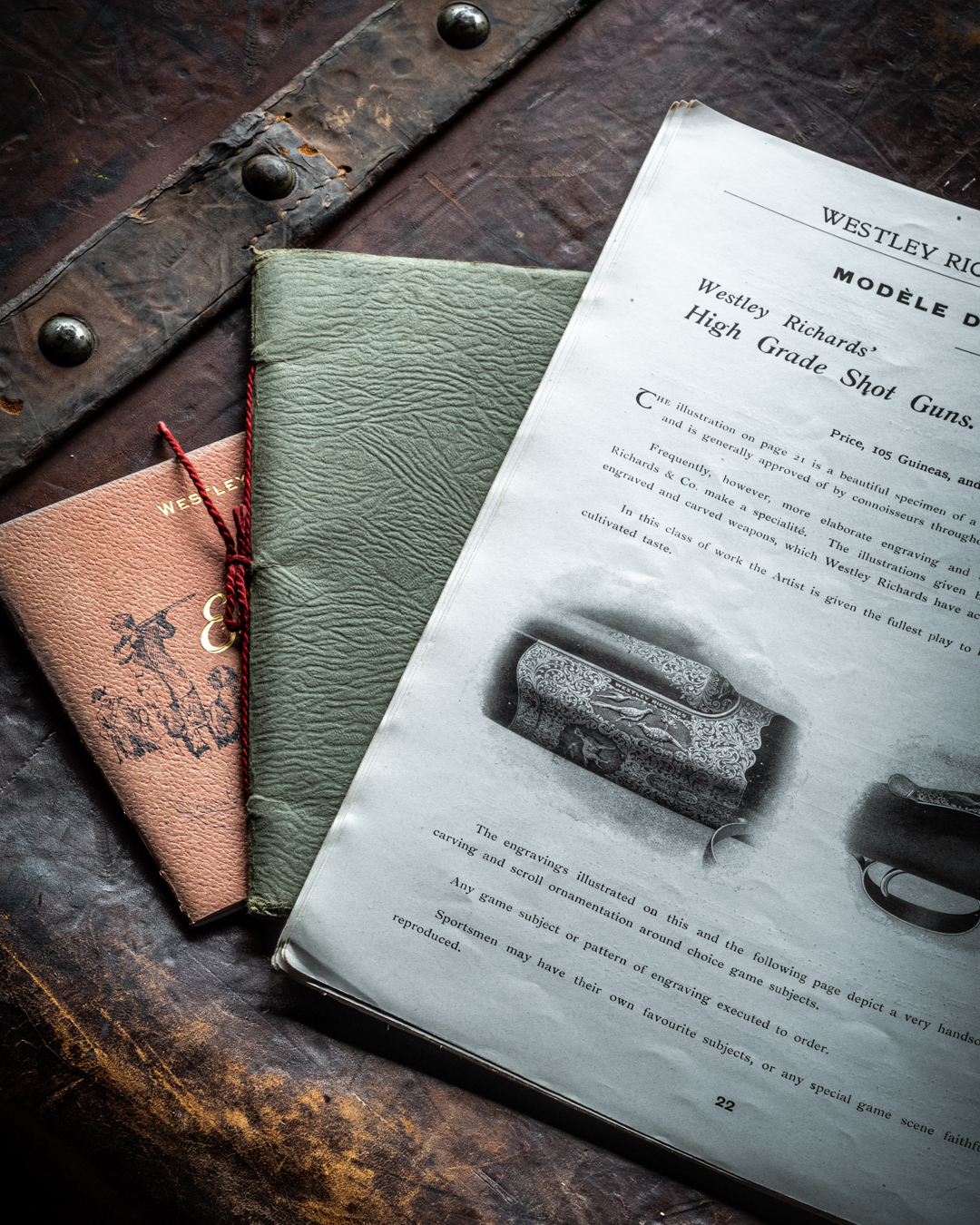
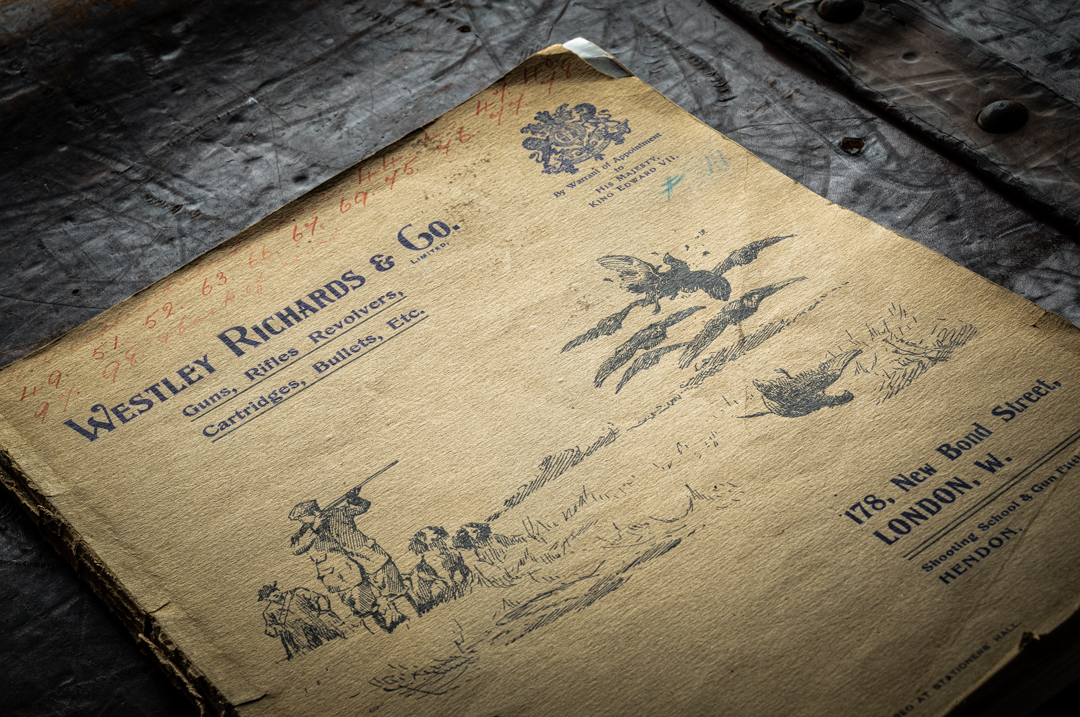
‘Mallards in Flight’ was a Blinks painting widely used as a template for wildfowling guns. And the Westley Richards catalogues of the early twentieth century utilize Blinks images throughout. His style of painting the game in the foreground and the sportsman in the background is unusual and brings the energy of the evading, or immediately hit, quarry a dramatic presence as the focal point, rather than it being a small, distant target.
Blinks prints still turn up in provincial auctions and sell for a few pounds. They make a nice, traditional addition to any gun room or country house study and their use as reference material for the engravers working on game scenes and the Westley Richards catalogue designers of the pre-Great War era adds a little more relevance to them from the point of view of the gun collector.
Thomas Blinks was fortunate to live through a wonderful period in British history for the wealthy sportsman and elevated himself, through his own talent, from tradesman to celebrated artist, enjoying the company of the great men of the day. He was spared the devastating spectacle of the First World War, which brought so much of that Edwardian idyll crashing to the ground.
Today, his dramatic and action-packed studies of man, bird and beast remind us of the exuberance, gentility and passion of the sportsmen of Britain, in the heyday of Empire.
The Explora Blog is the world’s premier online journal for field sports enthusiasts, outdoor adventurers, conservationists and admirers of bespoke gunmaking, fine leather goods and timeless safari clothes. Each month Westley Richards publishes up to 8 blog posts on a range of topics with an avid readership totalling 500,000+ page views per year.
Blog post topics include: Finished custom rifles and bespoke guns leaving the Westley Richards factory; examples of heritage firearms with unique designs and celebrated owners like James Sutherland and Frederick Courtenay Selous; the latest from the company pre-owned guns and rifles collection; interviews with the makers from the gun and leather factory; new season safari wear and country clothing; recent additions to our luxury travel bags and sporting leather goodsrange; time well spent out in the field; latest news in the sporting world; and key international conservation stories.