 Enquire

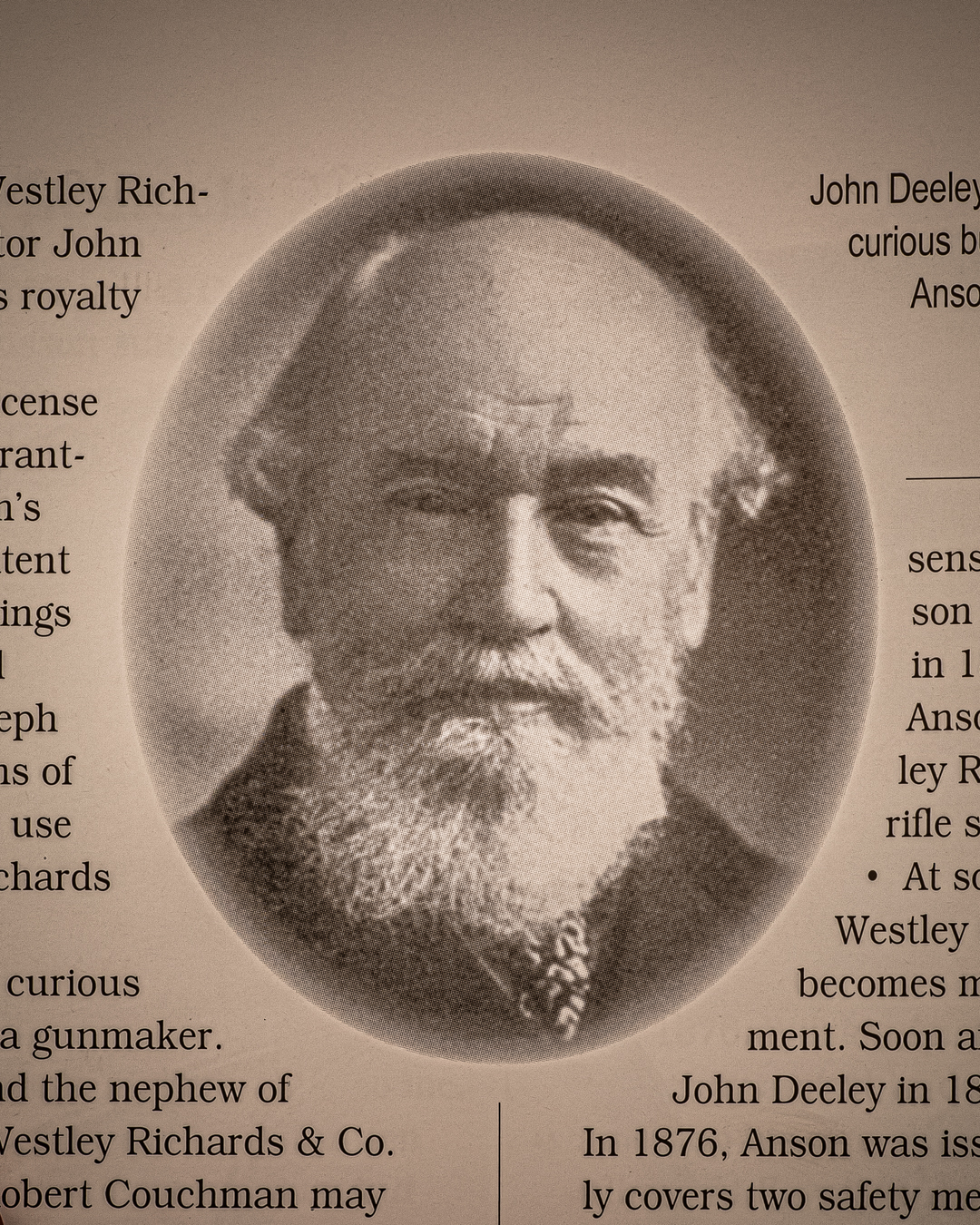
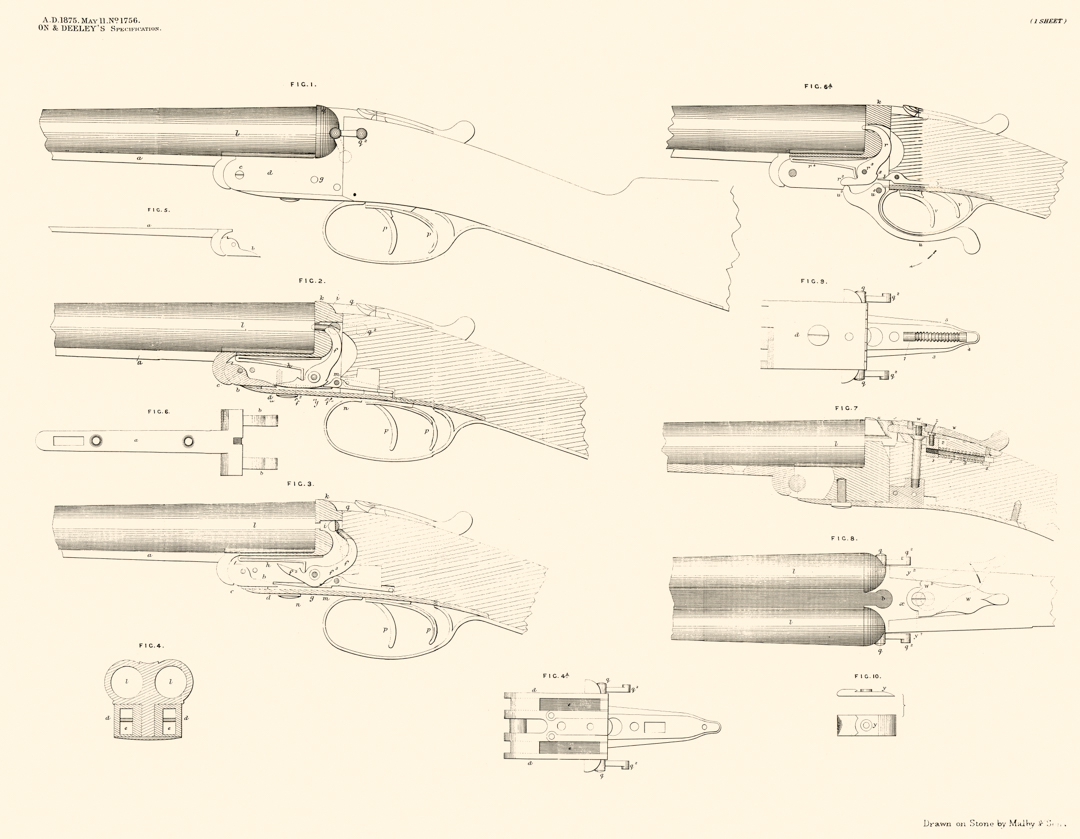
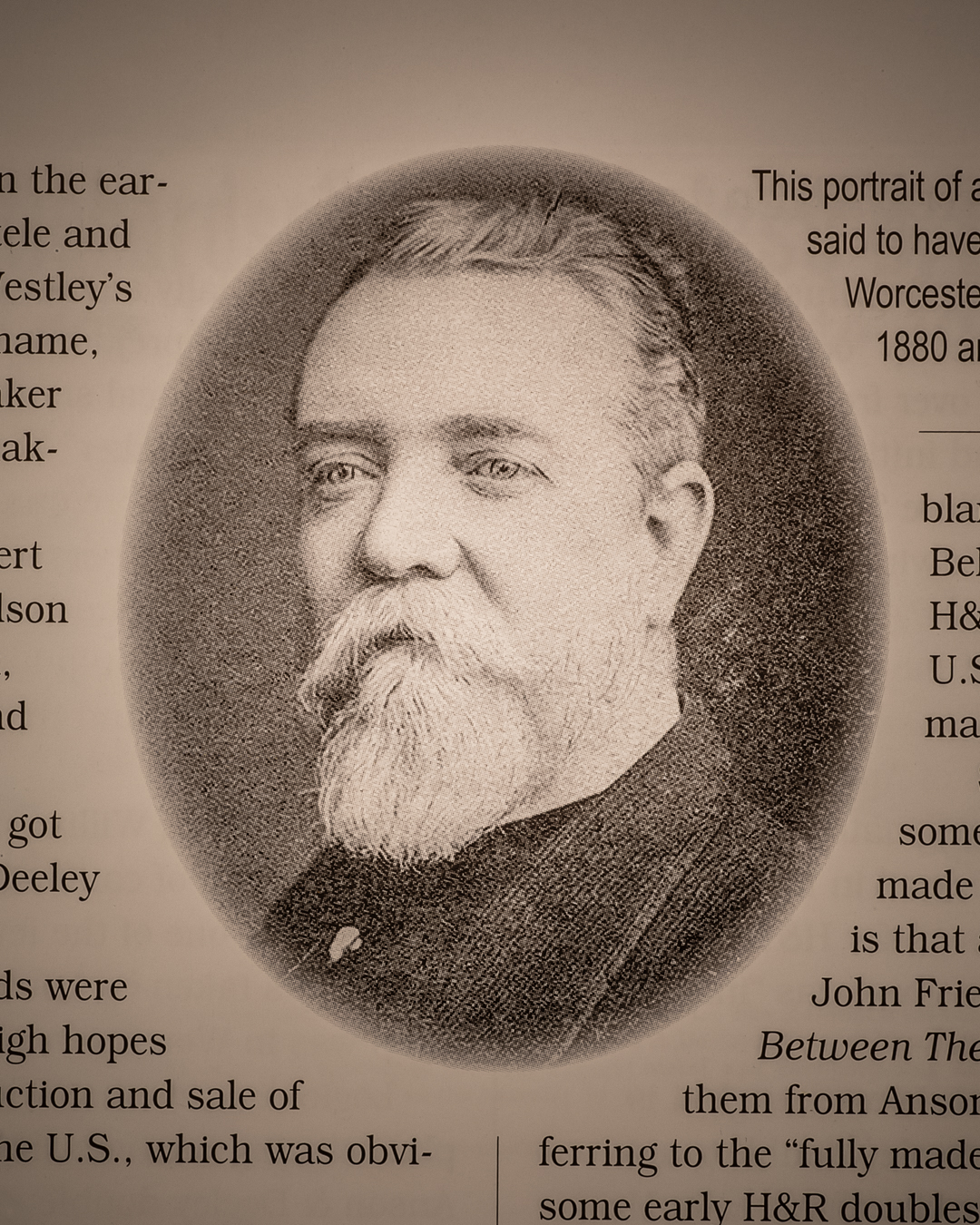
Patent No.1756 of 1875 was filed by two gunmakers based at the Westley Richards factory in Bournbrook , south-west Birmingham. William Anson was the factory foreman and John Deeley the managing director. In other news that year, London’s Alexandra Palace re-opened having been burned down two years earlier, Alexander Graham Bell made the first sound transmission and Tchaikovsky’s Piano Concerto No.1 was performed for the first time, in Boston.
The A&D patent was not the first ‘hammerless’ gun offered to the British sporting public; that distinction goes to Theophilus Murcott’s ‘Mousetrap’. However, nobody has made a Mousetrap since the 1870s. Conversely, what has become universally known as the ‘Boxlock’ is still in production all over the world and many examples made in the first decade of its existence are still in service.
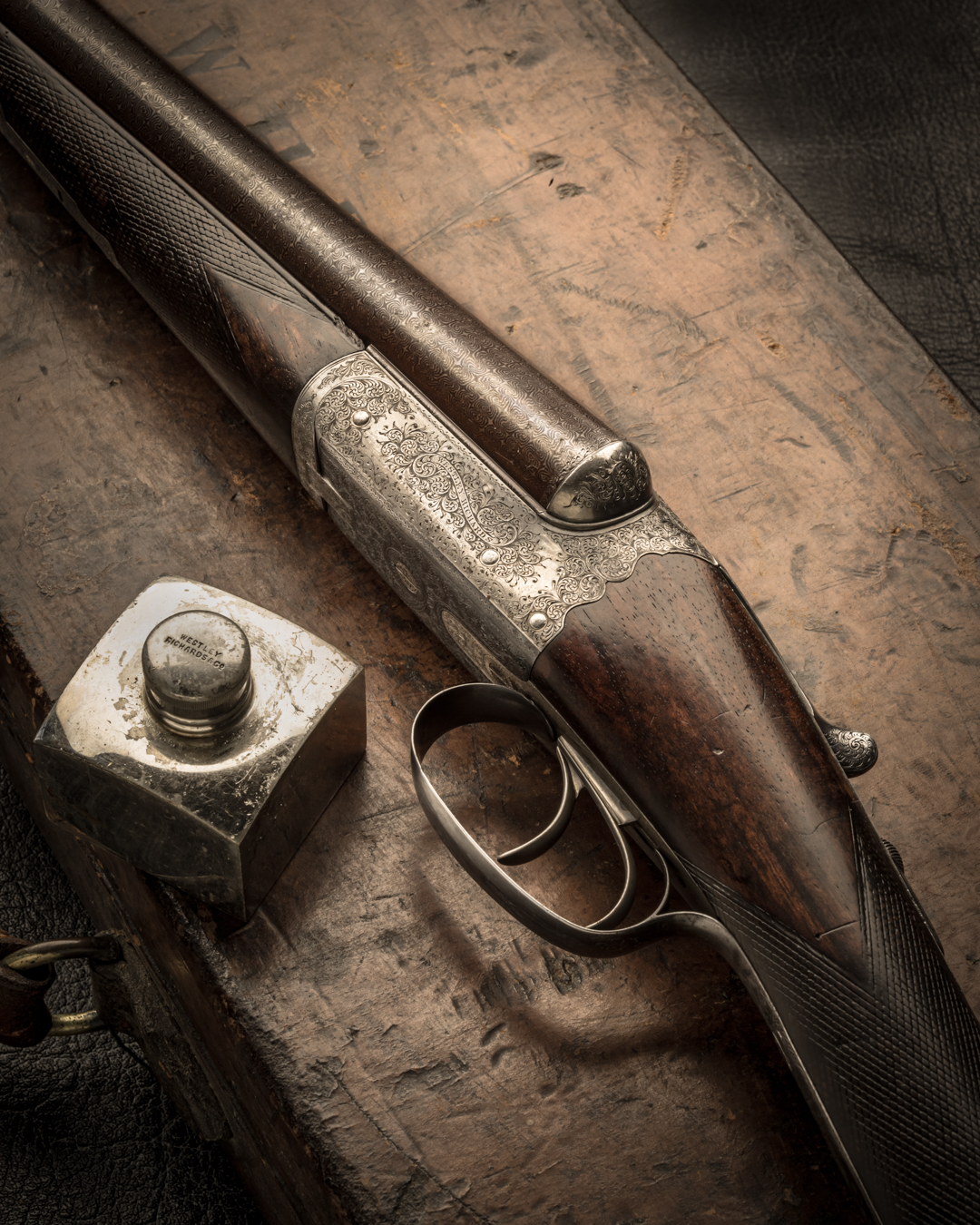
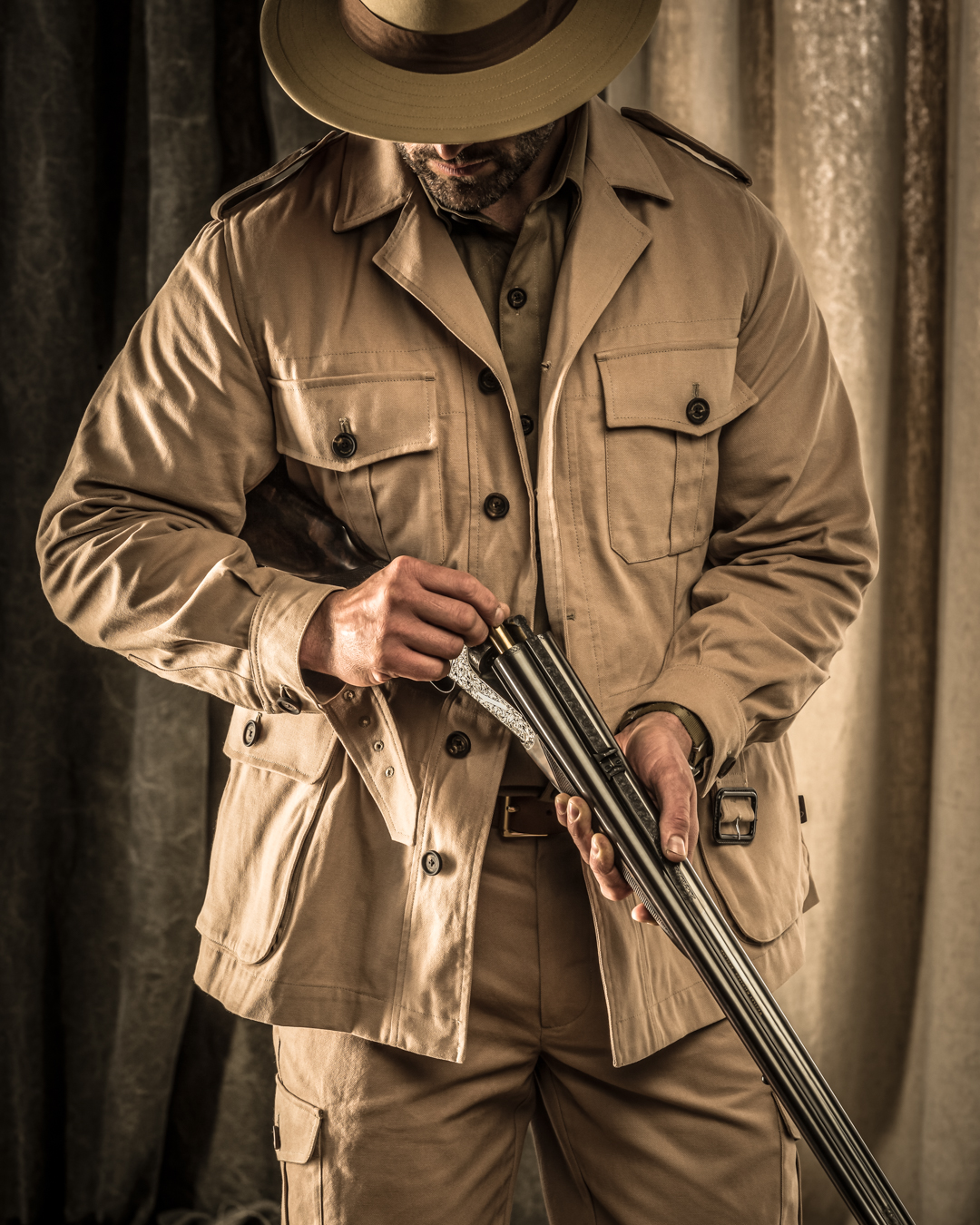
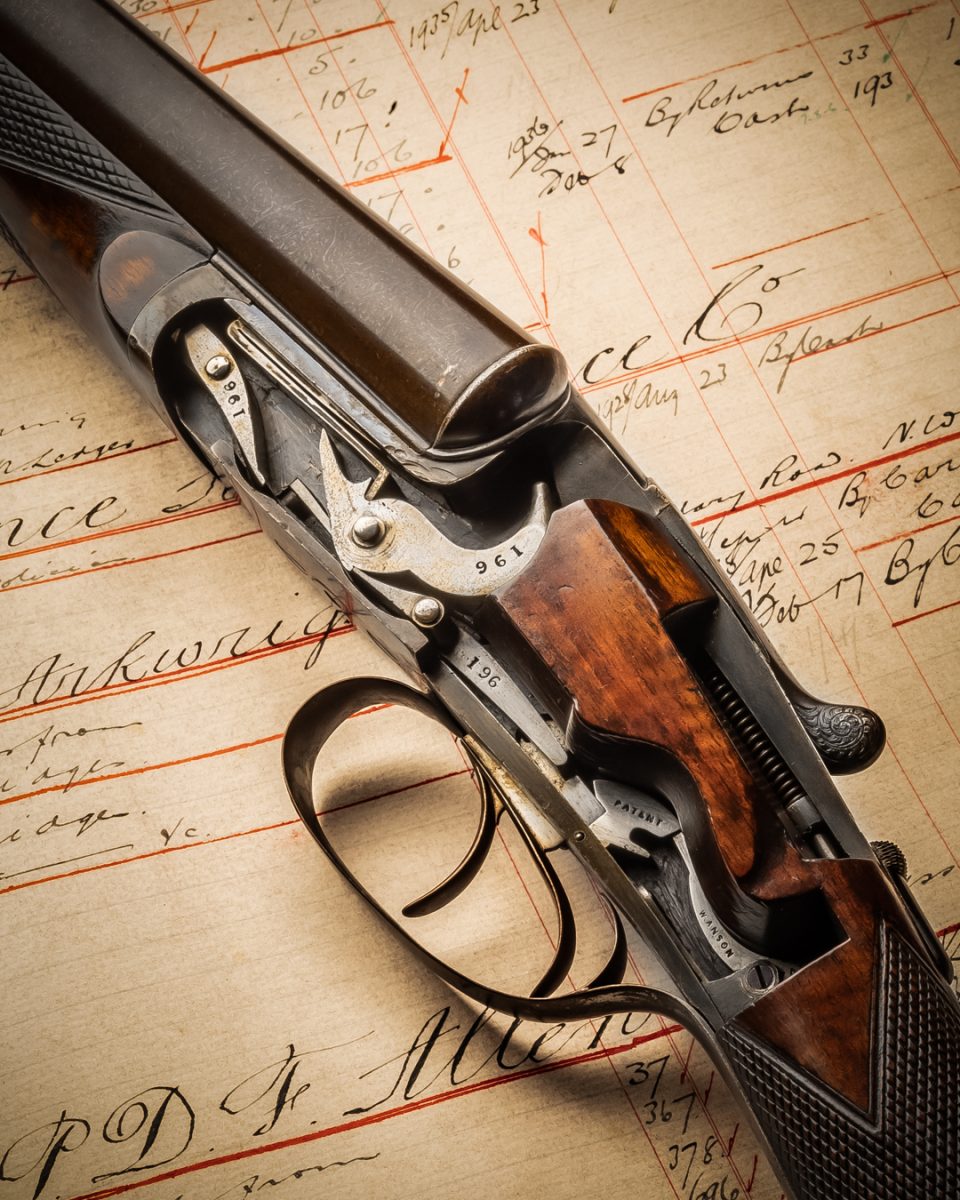
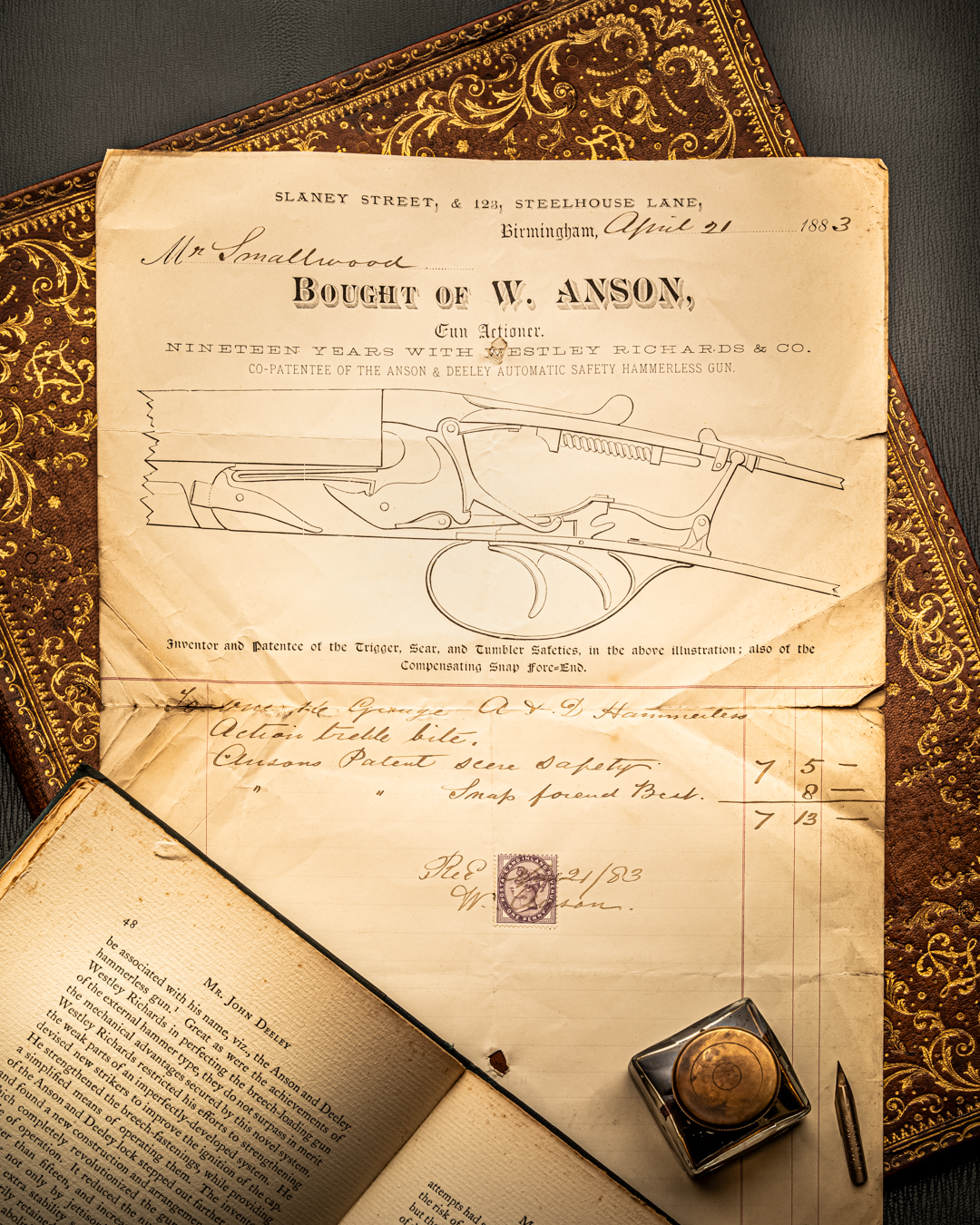
The A&D action offered a revolutionary approach to installing the lock inside the gun, along with the hammer. It consists of a cocking dog, a sear, a sear-spring, a main-spring and a hammer. The lockwork is inserted into a recess in the action body and retained by a lateral pin, which acts as a pivot for the hammer. Because the parts are few, they can be made robust. Because they are few and robust, they can be made and assembled relatively quickly; certainly quicker than any of the side-locks or hammer guns then in production.
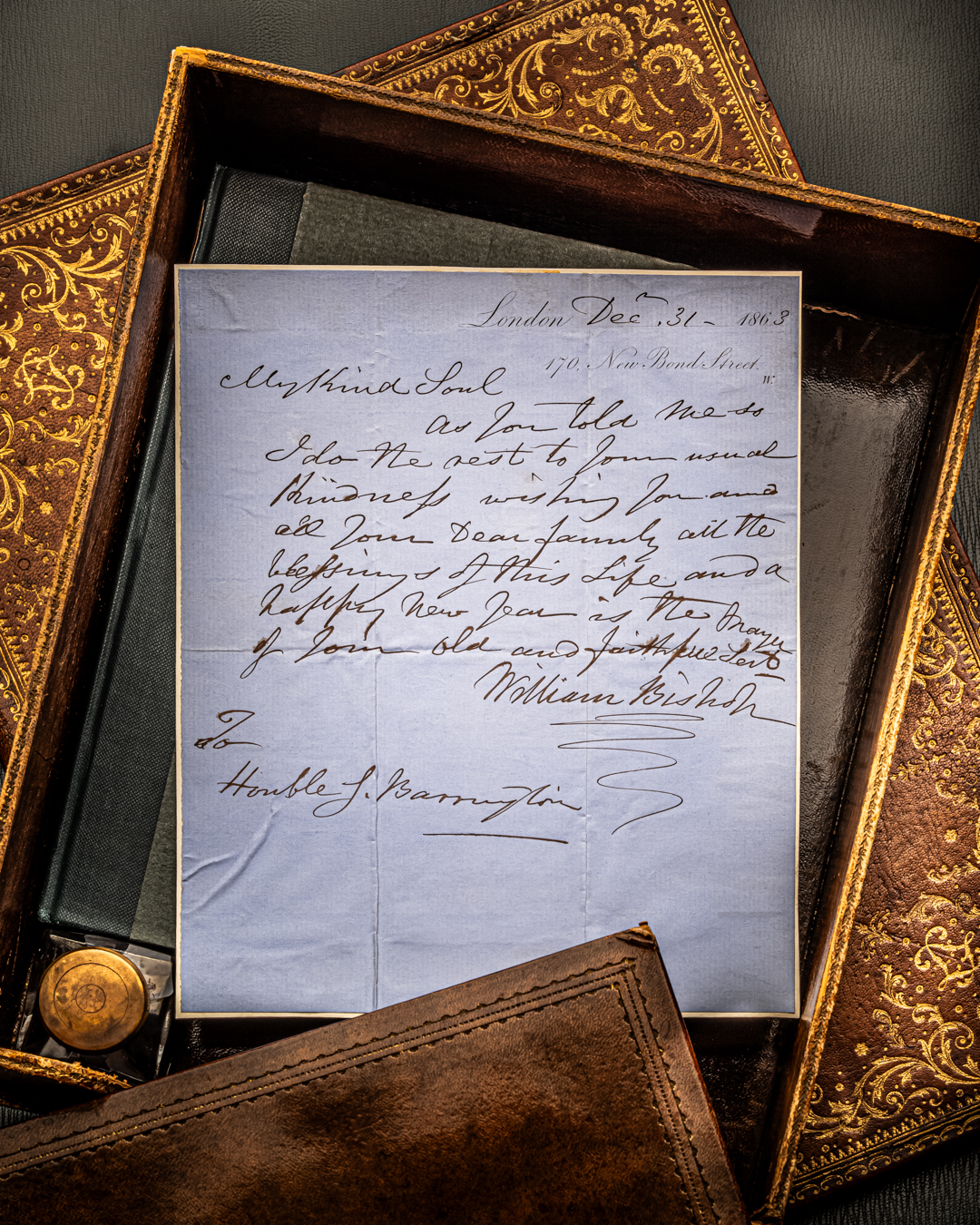
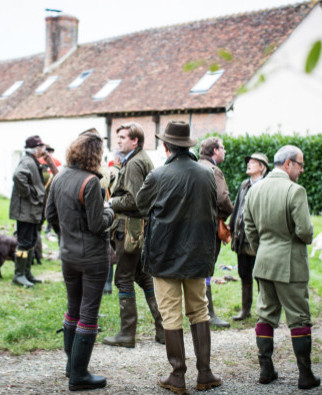
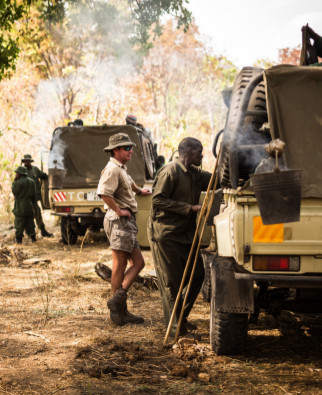
These qualities of ease of manufacture, strength and reliability made the A&D immediately attractive to other makers, who were quick to adopt it. It soon became the gun for everyman. Plain examples found their place in the hands of farmers and wildfowlers, while ‘best’ versions graced the finest grouse moors. Big rifles built on the A&D action headed for India and Africa in search of dangerous game. At Westley Richards, the new action immediately became the company flagship. Early models were non-ejectors with Damascus barrels and a single lump. The bolting was via the Westley Richards ‘dolls head’ and top-lever alone.
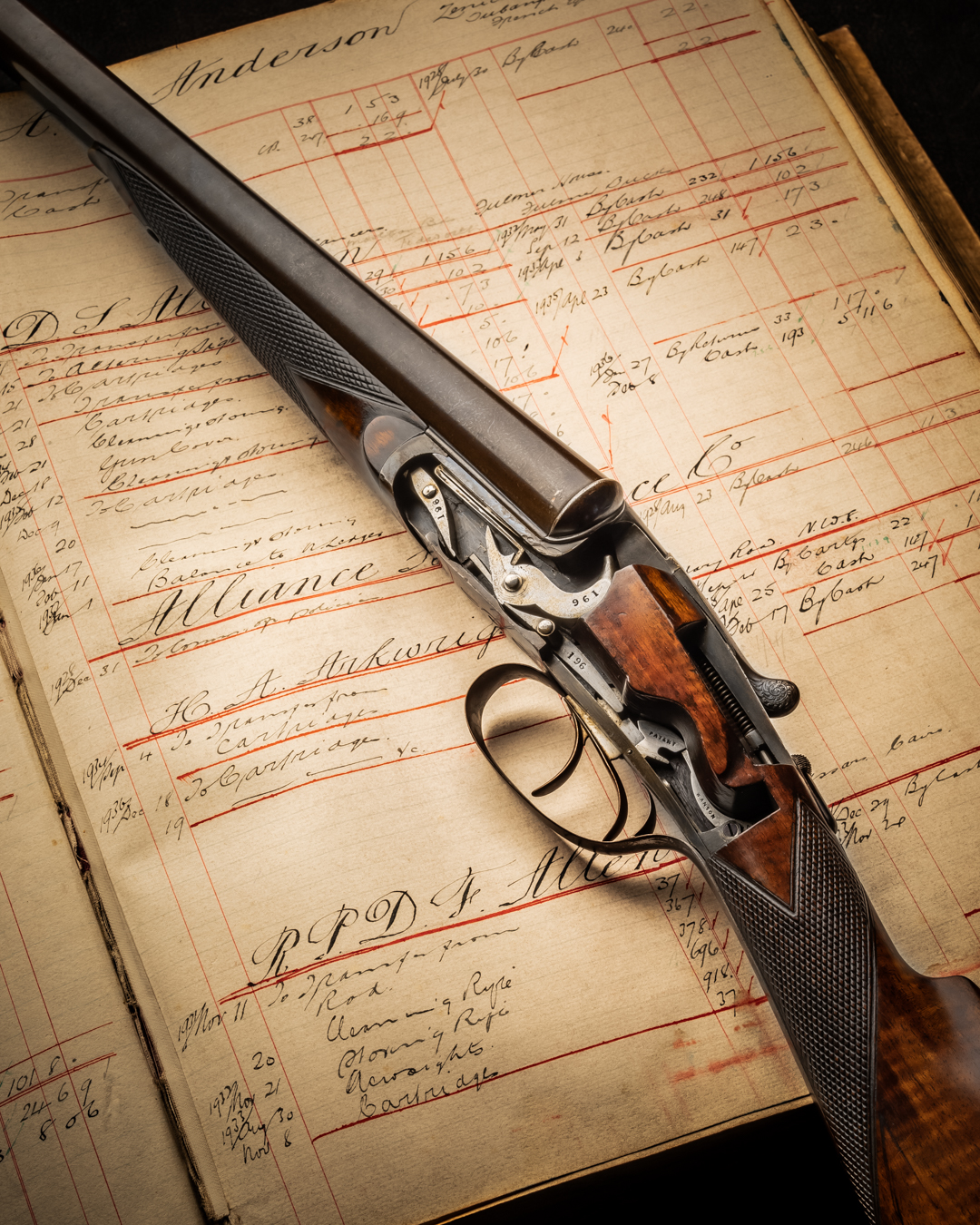
Later, a second lump was added along with the Purdey double under-bolt, making a treble-grip action. In the early 1880s ejectors were added (a patent lodged by John Deeley’s son in 1884) and modifications over the years included the double-dog cocking system (Anson & Deeley patent No.1833 of April 1883), which was ultimately discontinued.
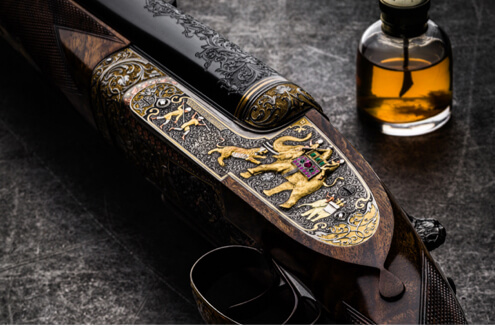
Before the Great War, the Westley Richards A&D ejector gun in ‘best’ quality was the epitome of modern design and artistic execution, with Modele de Luxe and Modele de Grand Luxe taking the exhibition grade concept to new heights. By the 1920s many of these superb specimens were heading out to the armouries of Indian princes and other eastern potentates as far afield as Siam, Persia and Japan. Elaborately decorated, precious metal inlaid and even jewel encrusted, they are, in the opinion of some aficionados, the highest expression of sporting firearms offered in the pre-war era.
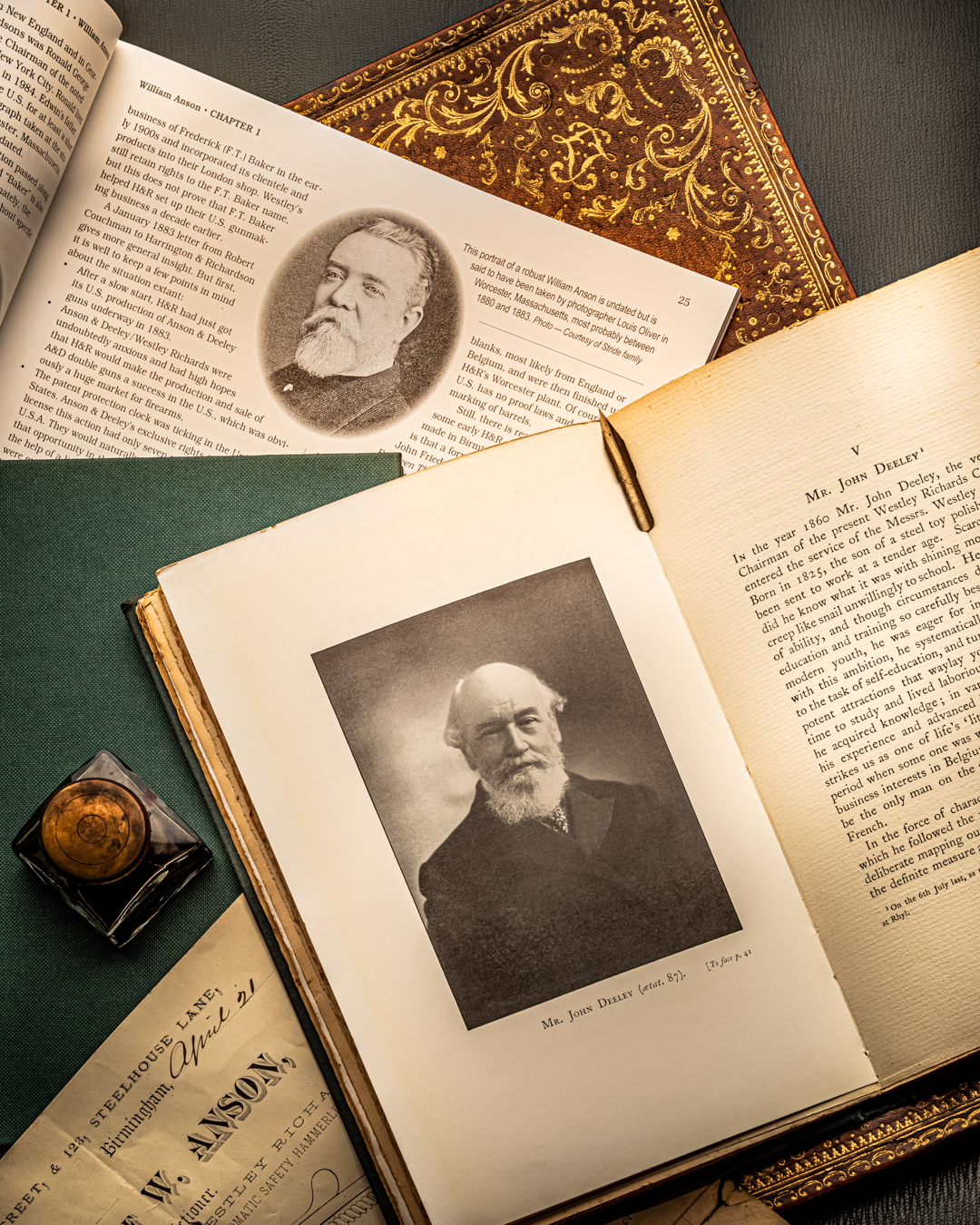
With the arrival of the A&D action in 1875, the era of the breech-loading hammer gun went into decline. Not only were hammerless guns seen to be more modern, they were less prone to damage; external hammers can be cracked or broken by impacts to which a hammerless gun is oblivious. Side-locks became ‘hammerless’ merely by making the hammers smaller and mounting them inside the lock plates rather than outside of them. By using cocking dogs on the A&D principle, they could be cocked by the fall of the barrels too.
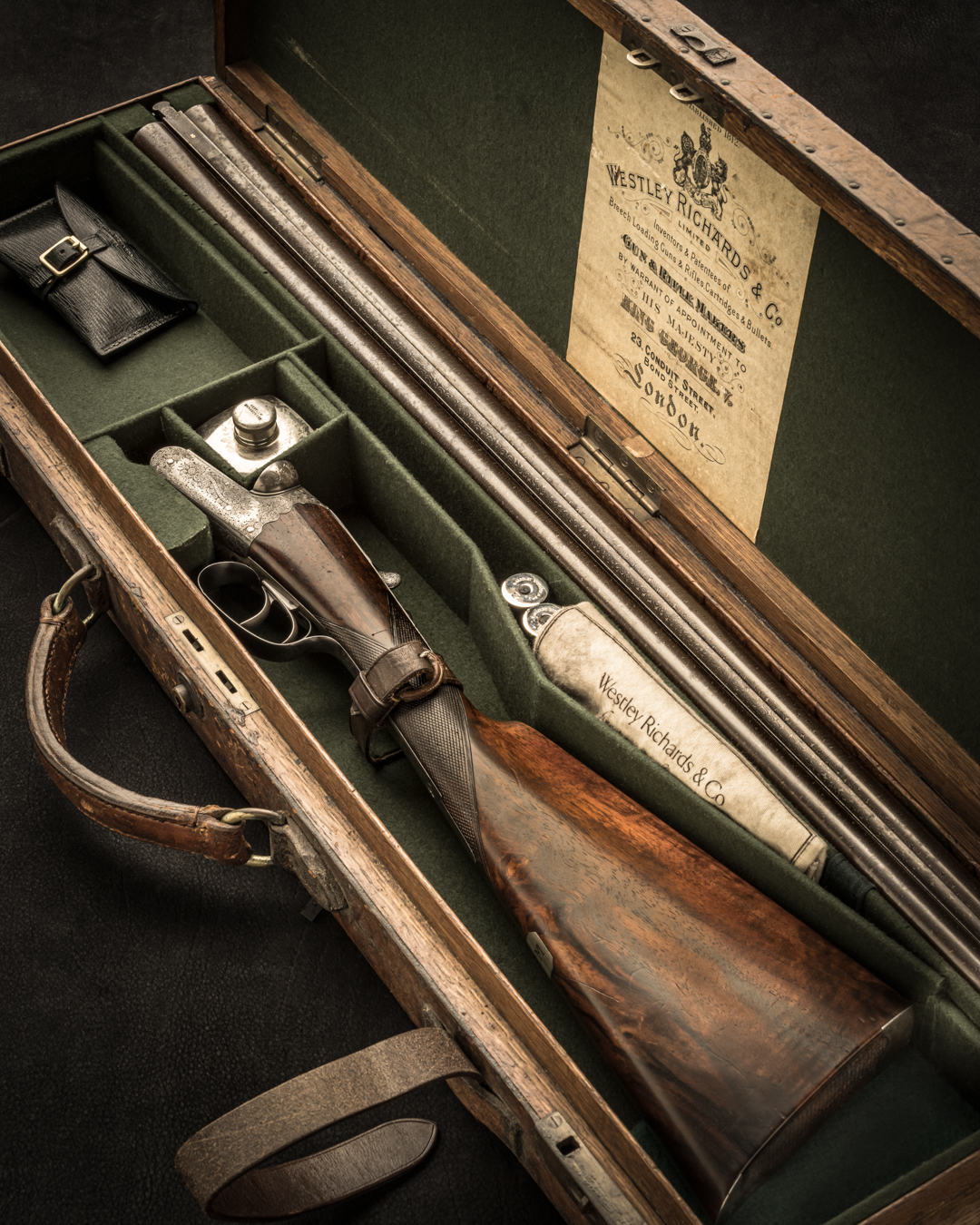
While best side-locks became more sophisticated with the advent of the Purdey/Beesley action in 1880, other, plainer, sidelock actions, aiming to gain favour in the middle-sector of the market became simplified. However, none equaled the A&D when the quality-cost ratio was weighed. Put simply, an A&D gun at any given price point could be made to a higher quality than a sidelock. The reason was the number of parts and ease of assembly advantage the A&D enjoys. As a result, between 1880 and 1960 virtually every British gun-maker and retailer offered and sold boxlocks in large quantities and a wide range of qualities.
For some London makers, the sidelock became the preferred ‘best’ gun but it was not a settled opinion, with W.W. Greener, Westley Richards and E.J. Churchill notably persisting with best quality, expensive and highly decorated A&D guns. Overseas, other manufacturers, like Beretta of Italy, Francotte of Belgium, Guyot of France and Winchester of the United States adopted A&D action guns with great success. That success endures to this day and the A&D is still available from the budget Turkish offerings of Yildiz to mid-grade Berettas, right up to best quality bespoke versions from T.R White or Watson Bros.
The A&D was the inspiration for the 1897 Deeley & Taylor hand-detachable lock gun and rifle that Westley Richards uses today on all best quality side-by-side rifles and shotguns. The ‘drop-lock’ as it is widely known, is the same A&D lock-work, mounted on a plate for ease of insertion and removal. As Westley Richards enters its two hundred and thirteenth year, it is fitting to reflect on the one-hundred-and-fiftieth anniversary of this iconic design; one which has stubbornly endured despite the subsequent evolution of sporting guns into over & under, semi-auto and other configurations.
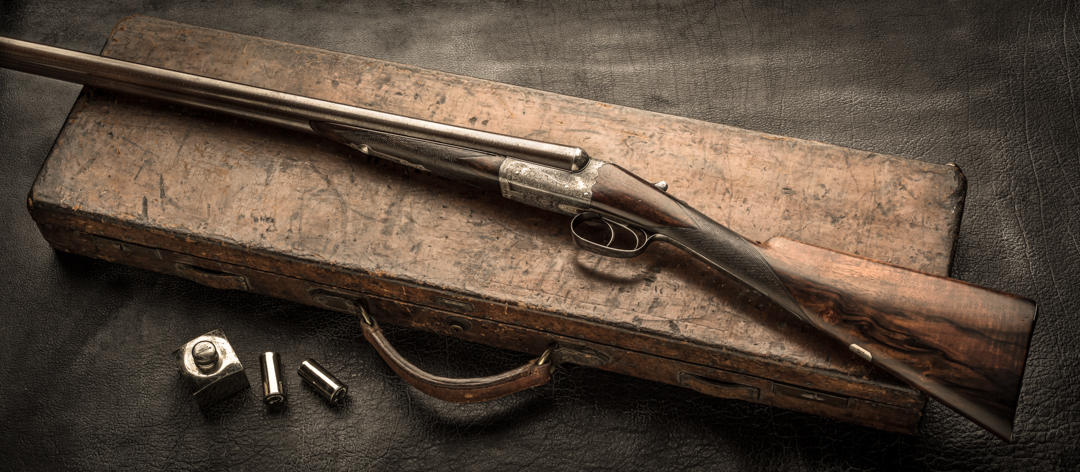
If one were to be forced to choose one gun or rifle to take and use for the foreseeable future without the possibility of access to a gunsmith or workshop, it would be hard to argue with the choice of a well-made boxlock. Even if neglected, they have proven capable of decades of service in inhospitable environments. Anson & Deeley’s legacy is one very much honoured at Westley Richards. These two Birmingham gunmakers gave the world one of the genuinely great sporting gun designs ever conceived. Their example serves as an inspiration to our current team of gunmakers; their successors in an unbroken line stretching back to 1875 and beyond.
Whether for the discerning collector or the avid sportsman, Westley Richards firearms represent the epitome of excellence in the world of bespoke gunmaking. Known for the droplock shotgun, over and under shotgun, double barrel rifle and bolt action rifle, the company has achieved an illustrious 200 year history of innovation, craftmanship and artistry. As part of our best gun build, clients can choose from three levels of gun engraving: the house scroll; signature game scenes; and exhibition grade masterpieces. All Westley Richards sporting arms are built at their factory in Birmingham, England. Discover more about the gunmaking journey at our custom rifles and bespoke guns pages.