Manton’s former apprentices, like James Purdey, William Greener, Thomas Boss, William Moore and Charles Lancaster continued his quest for excellence in gun-making, elevating the British sporting gun and rifle, in its highest form, to the status of both precision instrument and work of art.
That quest has never wavered at Westley Richards and our gunmakers today are as fervently ‘in pursuit of the best gun’ as were their nineteenth century forebears. However, the skills required of a best gun-maker are as difficult, time consuming and painstaking to acquire today as they were in the days of Manton, though our modern apprenticeship is rather less onerous and austere. It takes five years for us to train a young, aspiring gun-maker into one capable of working autonomously on our best guns and rifles.
Five years, to somebody starting that process of development is a long time. If the apprentice is twenty years old, five years represents a quarter of their life lived and a daunting prospect. It is important to break that block down into achievable goals that can be visualized and attained in a time frame that motivates the individual, incrementally taking them step-by-step towards the final goal.
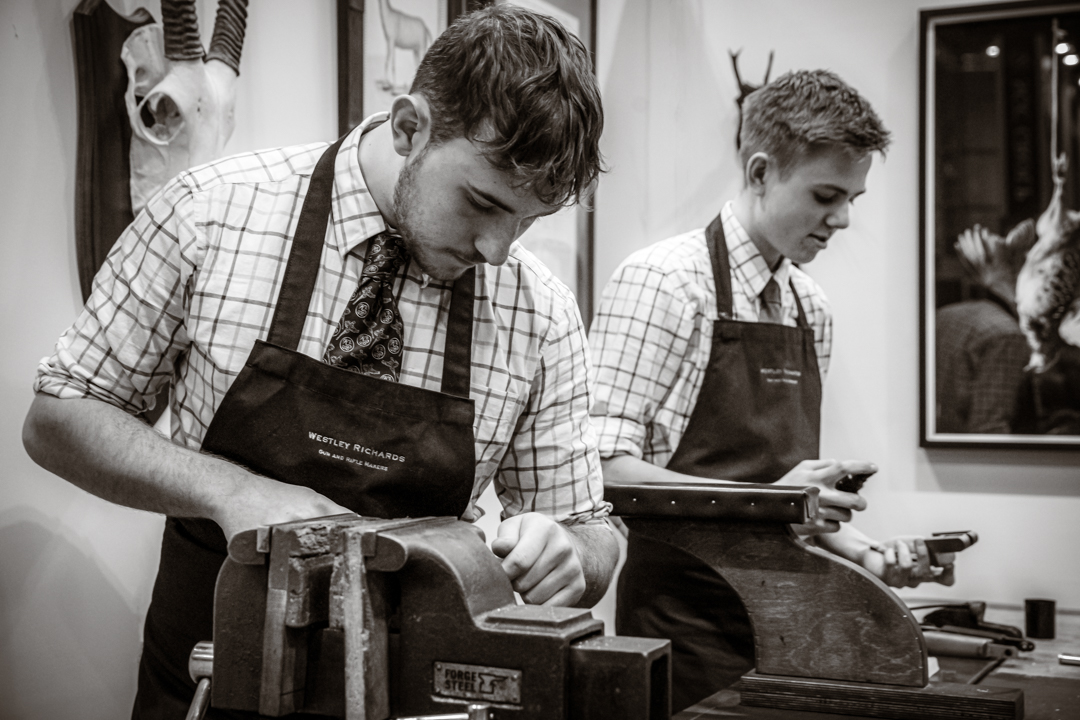
Westley Richards’ current crop of apprentice gunmakers includes Harry and Will, who have completed their first year, Henry, who is nine months in, and Maddy, who started in the spring of 2025. In order to appreciate what these stages are, from the perspective of the masters and their apprentices, we will take a more detailed look at the first year and how it progresses a young person closer to becoming a Westley Richards gun-maker.
Foreman Stuart Richards is in overall charge of the programme, with apprentices reporting to James Grinyer for most of their assignments, which are detailed in the ‘green book’; a file detailing their factory-based scheme of work. The modern apprenticeship includes one day per week at college, where apprentices study for an engineering qualification, while learning the practical gunmaking skills they need here.
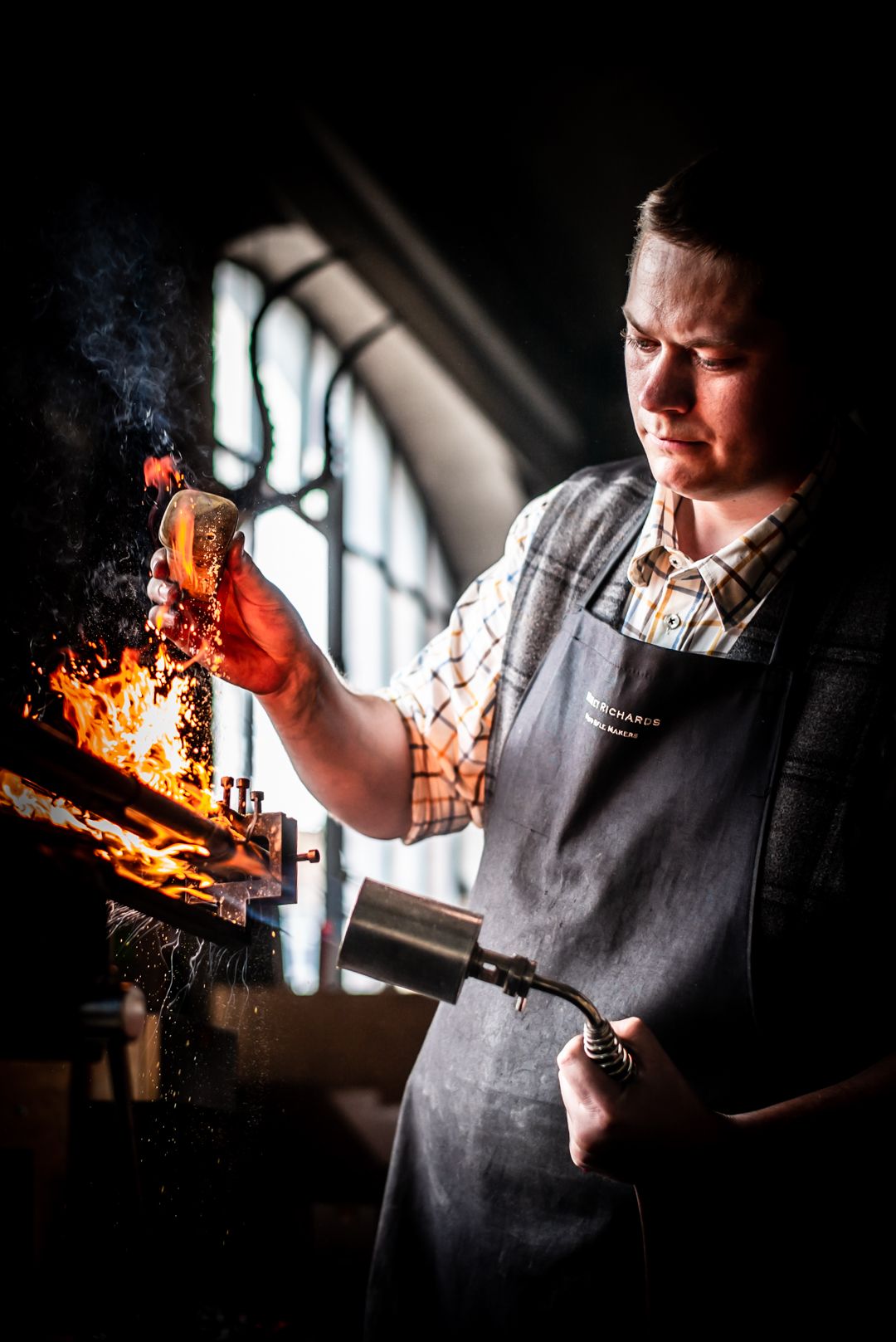
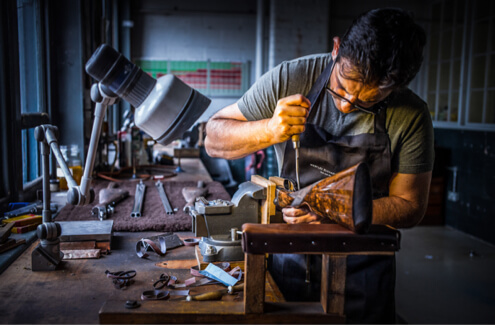
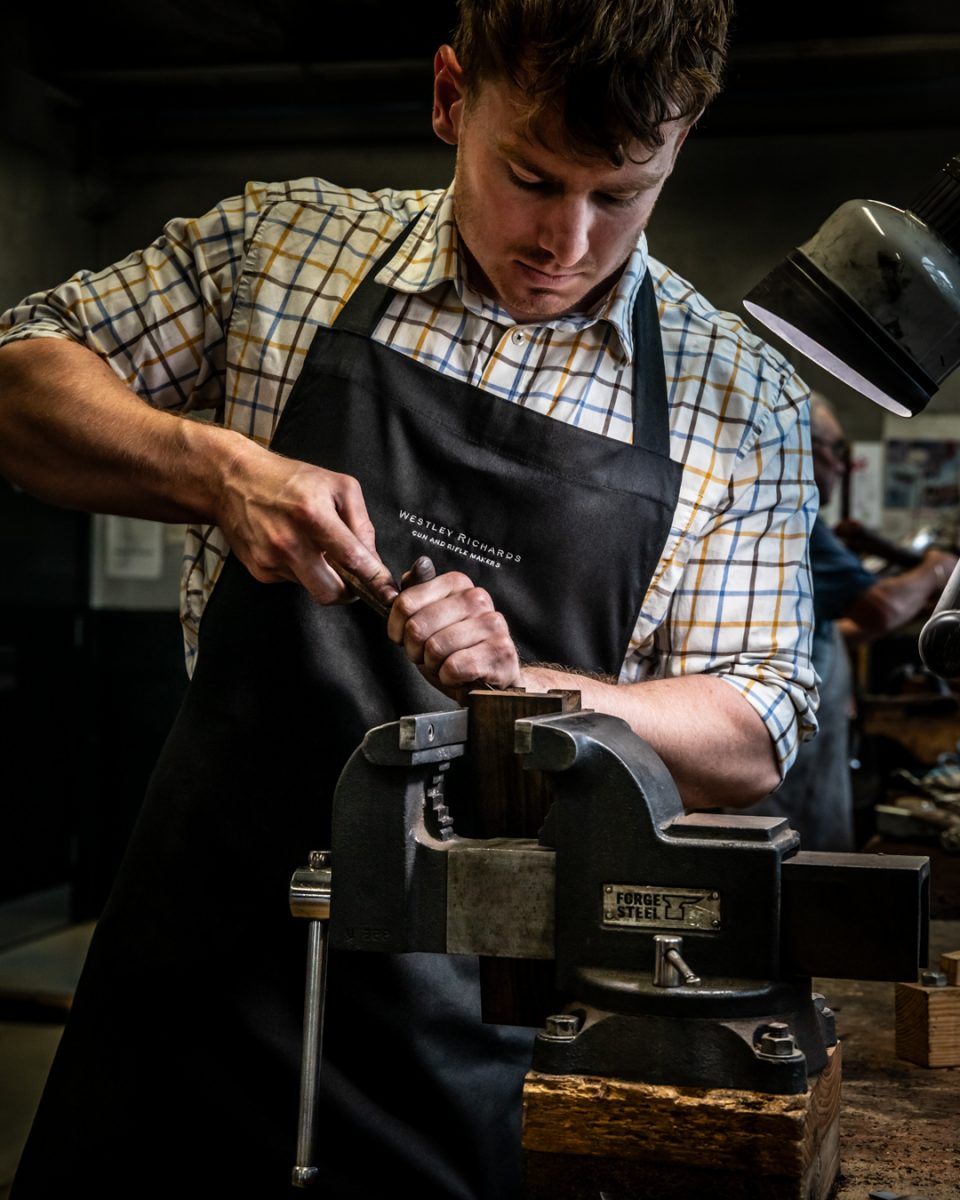
The first tasks apprentices are given are designed to help them acquire, through use, some skills with a file and with the machines in the factory. The focus is very much on metalwork. Even if the apprentice is eventually steered towards stocking, a solid grounding in metalwork is essential. The green book contains a list of tools to be made. Each one, once finished has to be signed-off by the supervisor as satisfactory.

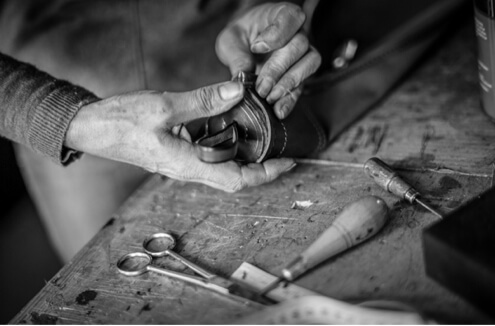
While making the tools, each apprentice is schooled in the correct use of the lathes, milling machines and other essential pieces of equipment, as well as in file technique. They work under supervision at first and make some of the parts they need for their tools. It has long been a tradition that the first objects apprentices make, while learning how to work wood and metal, are their own gunmaking tools.
Once the basics have been learned, they are ‘signed-off on machines’, and the apprentice can then be allowed to use the machinery unsupervised. He or she then has to focus on the task at hand and try to produce each tool of the appropriate quality. A lock-lifting tool, for example is 50% machining and 50% file work. A successful sign-off will recognise the level of achievement of both skills as satisfactory.
Foreman Stuart says he can tell from the way they make each tool where the apprentice’s key talents are apparent. Some take more easily to precision work and machining, others to handwork, shaping and artistry. It is usual for an apprentice to progress faster in one or other of those basic frameworks, though all are required to pass muster in every aspect of the job before moving on.
Stuart pointed to current apprentice Maddy’s ‘fish slice’ (A tool for heating pins) with its elegant bowed sides; nicely filed and pleasing to the eye, as an example. “The holes have to be precise, it introduces elements like brazing techniques and we apply some free will, we’ll say put some shape into it, make it nice. Maddy clearly has an eye for shapes, so she may well be best suited to stocking or file-up rather than the hard-core mechanical stuff like lock-making and jointing.
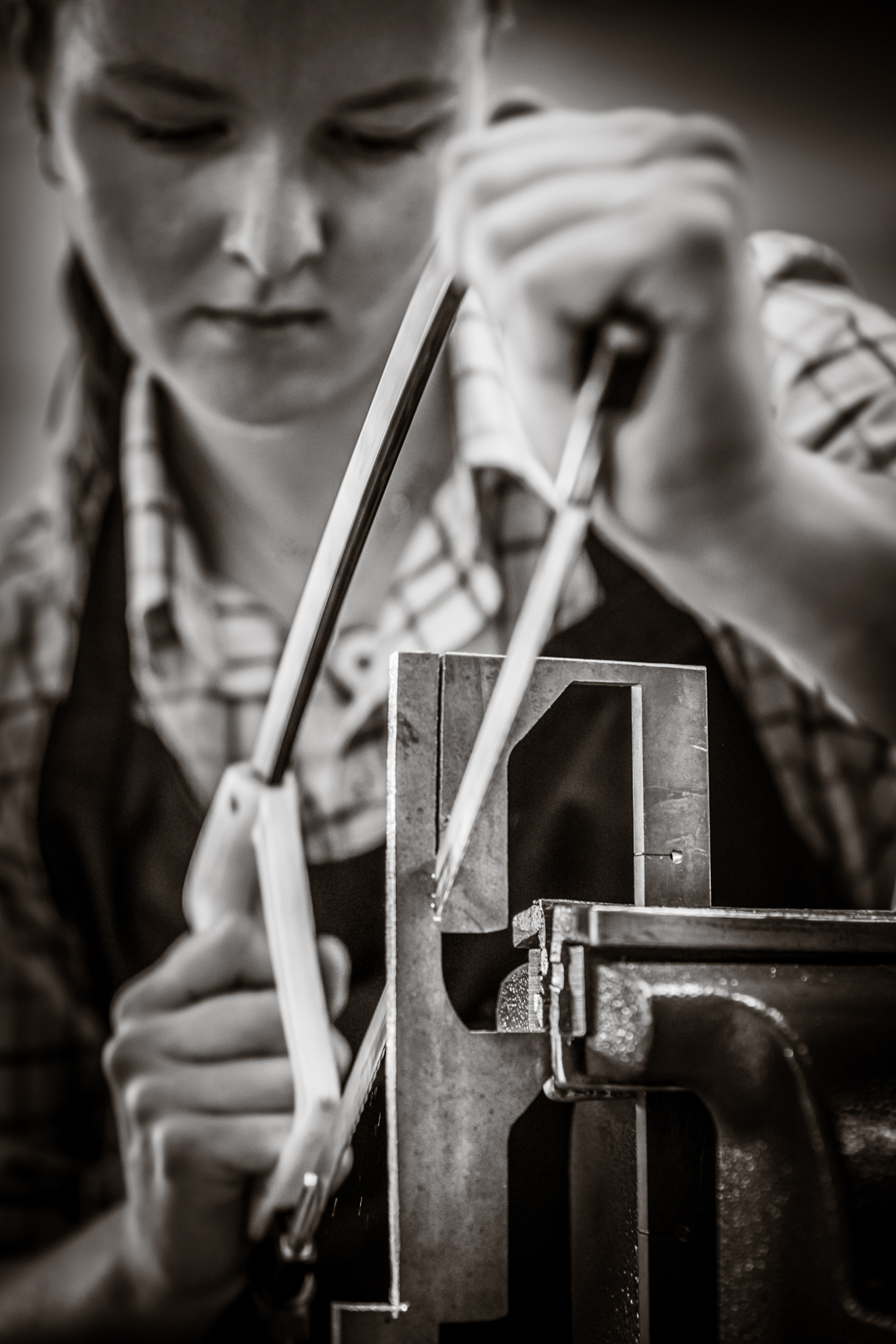
It might take several months for an apprentice to make all the tools on the list to the satisfaction of the supervisor. Once they have done so, the final task is to demonstrate the ability to file square. The tradition at Westley Richards is for a roughly square piece of steel be found from the scrap bin. It is then passed around the benches of the gunmakers and each one bashes it once with his hammer to put a dent in it. It is then given to the apprentice to take away and file into a perfect square. Only when the foreman approves the task as completed to the required standard is it considered done. It can take weeks.
While these core apprenticeship tasks are being worked on, the apprentices are simultaneously included in general work around the factory. They may go to the range to put up and take down targets, fetch and carry parts to and from blacking, polish rough parts, and even begin to work on small, restricted jobs like polishing and fitting-together the parts of a Deeley catch or front sight.
As most apprentices show aptitude for different types of task, so they may progress faster down one avenue than another. There is no reason to hamper progress in one area because of a slower rate of learning in another. Eventually, their work in every assessed area must come up to the required standard but it is recognised that everyone will need extra help in some areas and that those areas differ from person to person. Stuart believes the system works and that any apprentice who accepts the challenge and applies their focus and desire in a fully committed manner can, and will, succeed.
Those who do not, self-select and leave the programme rather than being rejected. As with so much in life, willingness to work and a vision of the future is necessary to be successful.
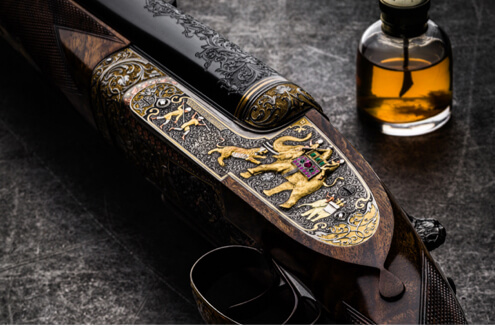
Whether for the discerning collector or the avid sportsman, Westley Richards firearms represent the epitome of excellence in the world of bespoke gunmaking. Known for the droplock shotgun, over and under shotgun, double barrel rifle and bolt action rifle, the company has achieved an illustrious 200 year history of innovation, craftmanship and artistry. As part of our best gun build, clients can choose from three levels of gun engraving: the house scroll; signature game scenes; and exhibition grade masterpieces. All Westley Richards sporting arms are built at their factory in Birmingham, England. Discover more about the gunmaking journey at our custom rifles and bespoke guns pages.